May 05, 2026
How to Handle Repeat Contacts: When Customers Keep Coming Back for the Same Problem
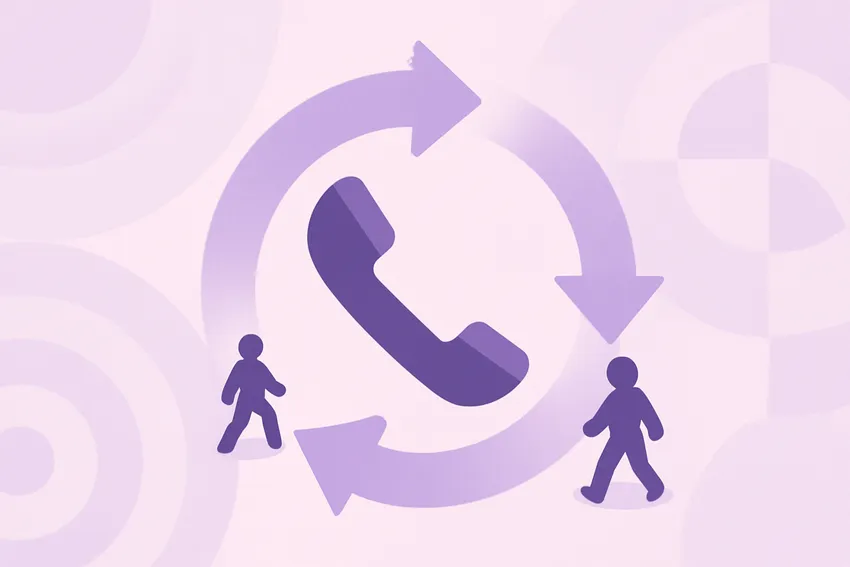
You’ve seen it a hundred times. A customer submits a ticket, your team resolves it, and then three days later they’re back with the same problem. Same customer. Same issue. Sometimes the exact same message copy-pasted.
This isn’t just frustrating for your agents. It’s a signal. Repeat contacts are your support queue telling you that something upstream is broken, and every time you close that ticket without fixing the root cause, you’re just buying yourself a few more days before it comes back.
What Repeat Contacts Actually Cost You
Most teams track ticket volume. Fewer track repeat contact rate, which is the percentage of customers who reach out more than once about the same issue within a defined window (usually 7 or 30 days).
It’s one of the most expensive problems in support, and it tends to hide in plain sight.
Here’s the math. If 20% of your tickets are repeat contacts, and you’re handling 500 tickets a week, that’s 100 tickets you’re paying to resolve twice. Your agents spend time re-reading context, re-explaining solutions, and sometimes apologizing for the fact that the first fix didn’t stick. That’s not just time. That’s also morale.
There are a few layers of cost worth thinking about:
- Agent time: Every repeat contact is a ticket that costs you twice (or more)
- Customer frustration: Customers who contact you repeatedly about the same issue have a much higher churn risk
- Queue congestion: Repeat contacts inflate your ticket volume and make capacity planning harder
- Missed product signals: Every repeat contact is a bug report, UX failure, or documentation gap that isn’t being surfaced to the right team
If you’re seeing burnout on your team and can’t figure out where the pressure is coming from, repeat contacts are often a big part of the answer. The Support Burnout Is a Data Problem post covers this in more detail, but the short version is: high-frustration ticket patterns are a data problem before they’re a people problem.
Why Customers Come Back for the Same Problem
Before you can fix repeat contacts, you need to understand what’s actually causing them. It’s rarely one thing.
The Resolution Wasn’t Actually Complete
This is the most common cause. Your agent closed the ticket thinking the problem was solved, but they only addressed one layer of it. The customer ran into the same wall again because the underlying issue wasn’t fixed.
This happens a lot when agents are under pressure to close tickets fast. They answer the question that was asked without asking “will this customer hit this same wall again tomorrow?”
The Fix Was Confusing to Follow
Sometimes the resolution was technically correct, but the customer couldn’t execute it. Instructions were too technical. Steps were out of order. There was an assumption baked in that the customer didn’t share.
You resolved it. They couldn’t follow it. So they’re back.
The Problem Is Intermittent
Some issues don’t happen consistently. A payment processing bug that only shows up under specific conditions. A feature that works fine on desktop but breaks on mobile. The customer contacts you, it’s resolved in the moment, and then it happens again two weeks later.
These are especially painful because they look like repeat contacts when they’re actually recurring bugs.
Your Documentation Is Wrong or Out of Date
A customer reads your help article, tries what it says, it doesn’t work, and they contact support. Your agent sends them to the same article. Nothing changes. Back they come.
Out-of-date knowledge base content is a direct driver of repeat contacts, and most teams don’t audit it often enough.
The Agent Who Originally Helped Them Doesn’t Have the Context
If the ticket was resolved by one agent and the follow-up goes to a different one, the new agent starts cold. They re-ask questions the customer already answered. The customer feels unheard, the issue isn’t addressed properly because context was lost, and the cycle continues.
This is specifically why keeping context when tickets change hands is so important. Without good handoff systems, you’re setting repeat contacts up to keep repeating.
How to Measure Your Repeat Contact Rate
You can’t fix what you don’t track. Start here.
Define your window. A 7-day repeat contact window catches customers who contacted you, left unsatisfied, and came back quickly. A 30-day window is better for issues that take longer to resurface.
Define what counts. Are you tracking repeat contacts per customer (same person, any issue)? Or repeat contacts per issue type (same problem, any customer)? Both are useful. The first tells you about individual customer frustration. The second tells you about systemic product or documentation problems.
Pull the data. In a well-configured helpdesk, you can filter for customers who have more than one ticket in a given window and then look at the tags or categories on those tickets to see if there’s overlap.
If you don’t have tagging or categorization set up properly, you’ll want to fix that first. Consistent ticket tagging is the foundation of any useful support analytics.
Set a baseline. Once you can measure it, you can track whether your changes are working. A typical well-run support team might see repeat contact rates in the 10-15% range. If you’re above that, there’s something systematic going on.
How to Actually Reduce Repeat Contacts
Now the practical part. Here’s what actually moves the needle.
Fix the Resolution Quality Problem
The biggest lever is agent behavior at the point of resolution. Train your team to ask one question before closing every ticket: “Is there anything related to this that could come back and bite this customer?”
That’s it. That one habit change catches a huge percentage of incomplete resolutions.
Beyond that, add a closing checklist to your ticket workflow:
- Was the root cause addressed, not just the symptom?
- Are the instructions clear enough for someone non-technical to follow?
- Is there relevant documentation to send along?
- Are there related issues this customer might hit next?
This doesn’t have to be a formal checklist every single time. It can be part of how you train agents to think. But making it explicit helps, especially for newer team members.
Create Better Resolution Templates for Common Repeat Issues
If you’re seeing the same issue come back over and over, your response to that issue needs to be bulletproof. Review the tickets where customers came back and look at what was sent the first time. Where did it fall short?
Then rebuild the macro. Make it clearer. Add screenshots if the product has a UI component. Break instructions into numbered steps. Anticipate the follow-up questions and answer them preemptively.
For recurring issues, the goal is a response so thorough and clear that the customer never needs to contact you about that topic again.
Use Tagging to Surface Patterns
If you’re not tagging tickets by issue type, start now. Not with a hundred granular tags. Just 10-15 clean categories that match the main reasons customers contact you.
Once you have that data, run a weekly or monthly report and look for the issues generating the most repeat contacts. Those are your highest-priority targets for documentation improvement, product fixes, or process changes.
The pattern will usually fall into one of three buckets: a documentation gap, a product bug or UX problem, or a support response quality issue. Each one gets handled differently.
Fix the Documentation
When repeat contacts point to a documentation problem, the fix is usually one of these:
- The article doesn’t exist (create it)
- The article exists but is wrong or outdated (update it)
- The article exists but customers can’t find it (fix the search and linking structure)
After you send a resolution that includes documentation, track whether customers who received that article come back at a lower rate than those who didn’t. If your docs are working, you’ll see it in the data.
Good documentation also reduces initial contact volume. If you want to understand that side of the equation more, reducing ticket volume through self-service covers the full approach.
Create a Repeat Contact Flag in Your Workflow
When a customer contacts you for the second or third time about the same issue, that ticket should be handled differently from a first-time contact.
Specifically:
- It should be routed to a more senior agent or a specialist who can dig deeper
- It should have higher priority, since this customer is already frustrated
- The agent should receive context from the previous interaction automatically, not have to go hunt for it
In a good helpdesk setup, you can build an automation that flags contacts when a customer has had a previous unresolved interaction in the last 30 days. That flag triggers different routing rules. The customer doesn’t wait in the general queue and get assigned to whoever is available. They get assigned to someone with the context and experience to actually close the loop.
This connects directly to having a real escalation path in place. Repeat contacts from the same customer are a natural escalation trigger, and your workflow should treat them that way.
Close the Loop With Product and Engineering
This is the one most support teams skip. If you’re seeing 50 repeat contacts a month on the same billing error, that’s not a support problem. That’s a product problem wearing a support costume.
Build a process to route repeat contact trends to the people who can fix them. This doesn’t have to be a weekly meeting. It can be a shared Slack channel where support posts a monthly summary: “These five issues generated the most repeat contacts. Here are the ticket links.”
Engineers can’t fix what they don’t know is broken. And product can’t prioritize UX improvements if they’re not seeing the support data that shows the friction points.
If you have your helpdesk integrated with Jira, this becomes a lot more structured. You can create a ticket directly from support data and send it to the right team without the coordination overhead. The helpdesk integrations guide walks through how that flow works in practice.
When Repeat Contacts Are Actually a Retention Signal
Not all repeat contacts are created equal. Some of them are early warning signs for churn.
A customer who contacts you three times in two weeks about the same unresolved problem is not just frustrated. They’re evaluating whether your product is worth the continued effort. If they don’t feel heard or helped, they’ll leave quietly and you won’t find out until the cancellation email.
Pay attention to the customers generating the most repeat contacts. Look at their account health. Are they in their first 90 days? Are they on a high-value plan? Are they reducing usage while increasing support contacts?
Those customers probably need something beyond standard ticket resolution. They might need a proactive outreach from a CSM, or a call to actually walk through the problem together. The ticket queue isn’t always the right channel for customers in that state.
This overlap between support and retention is one of the most underused signals in SaaS. If you’re interested in building that out, reducing customer churn through support is worth reading.
The Systems That Make Repeat Contact Reduction Stick
Tactical fixes help, but they don’t stick without supporting systems. The teams that actually bring repeat contact rates down consistently have a few things in common.
They measure it regularly. Not just once when they decide to fix it. They track repeat contact rate as a standing metric in their weekly or monthly reporting.
They have clean ticket categorization. You can’t identify patterns without consistent tagging. If every agent tags things differently, you can’t aggregate the data meaningfully.
They have a feedback loop to product. A standing process, even a lightweight one, for sending support signal upstream to the people who can fix product and documentation issues.
They treat repeat contacts as a resolution quality signal. When an agent sees a repeat contact on their queue, the question isn’t “why is this customer back again?” It’s “what did we miss the first time?”
That reframe matters. It stops repeat contacts from feeling like a customer behavior problem and puts responsibility where it belongs: on the system that failed to close the loop.
Conclusion
Repeat contacts don’t happen because customers are difficult. They happen because something in your product, documentation, or support process didn’t fully solve the problem the first time.
The fix isn’t faster resolution times. It’s better resolution quality, cleaner handoffs, tighter feedback loops to product, and workflows that treat returning customers with the urgency and context they deserve.
Three things to take away:
- Measure your repeat contact rate first. You need a baseline before you can track progress. Consistent ticket tagging makes this possible.
- Fix the most common repeat contact issues at the source. Better macros, updated docs, and routing fixes will compound over time.
- Treat high-frequency repeat contacts as retention risks. The customers coming back repeatedly are the ones most likely to churn if you don’t close the loop.
If you want to build the kind of workflow that catches these patterns automatically, routing repeat contacts to the right agents and surfacing the right context automatically, HelpLane’s ticket management and automation features are worth looking at. And if you want to see how the full platform handles omnichannel support at scale, start with a tour of what we’ve built.
Related Blogs
See All Articles
How to Handle High Ticket Volume Without Hiring More Agents
Your ticket queue is growing faster than your team can handle it. Response times are creeping up. Agents are copy-pasting the same answers f
How to Manage Support Emails in Shopify (Without Losing Your Mind)
You opened a Shopify store. Orders started coming in. Then the emails started coming in. First a trickle. Then a flood. And somewhere betwee

Zendesk vs Gorgias vs HelpLane: Which Helpdesk Is Actually Right for You?
You're managing support across email, chat, and social. Tickets are piling up. Your team is copy-pasting between tabs. Someone suggested swi
Start Delivering Great Customer Experiences Today
Set up HelpLane in minutes and start managing all your customer conversations in one place. 14-day free trial—no credit card required.