Mar 21, 2026
The Support Handoff Problem: How to Keep Context When Tickets Change Hands
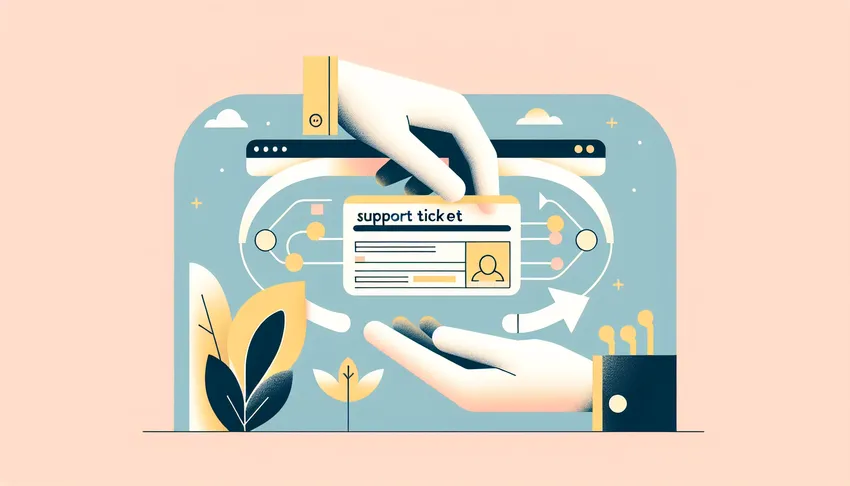
A customer emails in with a billing issue. Your first-line agent can’t resolve it, so they pass it to the billing specialist. The billing specialist asks the customer to explain the problem again from scratch. The customer, who already spent 10 minutes writing a detailed email, is now annoyed. They repeat themselves. The specialist resolves the issue, but the customer still leaves the interaction feeling like your team doesn’t have their act together.
This happens dozens of times a day at most support teams, and it’s entirely preventable. The ticket handoff problem isn’t about staffing or response times. It’s a context problem. And if you don’t fix it, every escalation, every shift change, and every cross-team transfer is quietly eroding your customers’ trust in you.
Why Ticket Handoffs Break Down in the First Place
Most support teams don’t have a handoff process. They have a ticket routing system. Those are different things.
Routing moves a ticket from one queue to another. A handoff actually transfers understanding. When you skip the second part, the receiving agent opens a ticket cold. They see the customer’s original message, maybe a status label, and not much else.
Here’s what they don’t see:
- What the first agent already tried
- What the customer’s tone was like (frustrated? patient? about to churn?)
- Side context from related tickets or account history
- What the customer was explicitly told about next steps
- Any internal hunches about what’s actually going on
So the new agent does what any reasonable person would do. They start fresh. They ask clarifying questions the customer already answered. And the customer’s experience takes a hit.
This gets worse as teams grow. With five agents, everyone kind of knows what’s going on. At 25 agents, across multiple shifts, time zones, or channels, you can’t rely on institutional knowledge anymore. You need a real system.
The Real Cost of Lost Context
It’s easy to treat handoff friction as a minor annoyance. It’s not.
Repeat explanations destroy trust. When a customer has to re-explain their problem, the implicit message is “we didn’t pay attention the first time.” That’s hard to recover from, especially for higher-stakes interactions like billing disputes, service outages, or account cancellations.
It slows resolution time. Every back-and-forth to re-establish context is time wasted. For SLA-sensitive tickets, this can be the difference between meeting your commitment and missing it. And for the customers you’re trying to retain, slow resolution is a churn signal.
It burns out your agents. Agents who receive poorly handed-off tickets spend more energy on triage than problem-solving. That’s demoralizing. It also means your experienced specialists are wasting their skills on information gathering that should have already been done.
It hides your actual support quality. If your metrics show a ticket resolved in two hours, but the customer spent 45 minutes of that re-explaining their issue to three different people, your data looks better than your reality is.
What Good Handoff Context Actually Looks Like
Before you fix the process, you need to know what you’re aiming for. A good handoff gives the receiving agent everything they need to pick up mid-conversation without asking the customer a single repeat question.
That means:
A concise situation summary
Not just the original ticket text. A summary written by the transferring agent that covers: what the customer’s problem is in plain language, what’s already been tried, and what the current status is. Two to four sentences. That’s it.
The customer’s emotional state
This one gets skipped constantly and it’s actually important. “Customer is frustrated and mentioned they’ve been a paying user for three years” is different from “Customer is confused but patient.” The second agent needs to calibrate their tone before they type a single word.
What was promised
If the first agent told the customer “we’ll have an answer by end of day,” the second agent needs to know that. Otherwise they might open with a request for more time, which contradicts what the customer was already told.
Related account context
Open orders. Recent billing changes. Previous tickets from the last 30 days. Any active flags on the account. This is where integration with your CRM or billing tool matters a lot.
A clear reason for the transfer
“Escalating to billing team” is not a reason. “Customer was charged twice for the same subscription and the refund didn’t process correctly. Needs someone with Stripe access to investigate” is a reason.
Building a Handoff Protocol That Actually Gets Used
The problem with most handoff protocols is that they’re too complicated. Teams create elaborate internal forms or 10-step checklists that nobody fills out under pressure. Then a ticket volume spike hits, agents skip the steps, and the system falls apart.
Keep it simple. Here’s what actually works.
Make the summary mandatory, not optional
If your helpdesk supports it, require an internal note before a ticket can be assigned to another team. Not a free-form comment. A structured note with specific fields: situation, what was tried, what was promised, emotional flag if relevant.
This doesn’t have to be long. Four short fields that take two minutes to fill out will save the next agent five minutes and the customer a lot of frustration.
Use conversation summaries as a forcing function
This is where AI genuinely earns its place in a support workflow. HelpLane’s AI-powered conversation summaries can automatically generate a summary of a ticket’s history before a handoff happens. The agent reviews it, edits if needed, and the receiving agent gets it the moment they open the ticket.
It removes the “I don’t have time to write a summary” excuse. The draft is already there. You just have to make sure it’s accurate.
Tag tickets with context flags, not just categories
Most teams tag tickets by topic (billing, technical, account). Add a second layer of tags for context: “escalated,” “promised callback,” “high-value account,” “already-apologized,” “multiple-attempts.” These tell the next agent things the category label never will.
Require a handoff note, not just a reassignment
This is a cultural thing, not just a technical one. Reassigning a ticket without a note should feel like leaving a half-finished job. It takes 90 seconds to write three sentences. If that’s not happening, the problem is usually that agents don’t feel accountable for what happens after the ticket leaves their queue. That’s a management problem to solve directly.
Handling Shift Changes Without Losing the Thread
Shift handoffs are a specific version of this problem, and they come with their own complications. You can’t always predict which tickets will be mid-conversation when a shift ends. Customers don’t time their problems for your schedule.
A few things that help:
End-of-shift wrap-ups. Twenty minutes before a shift ends, agents should flag their open, in-progress tickets with a status note. Not a full audit. Just “what is this ticket waiting on, and what’s the customer expecting next.” This takes discipline to enforce but makes a real difference for the incoming shift.
“Do Not Reassign Without Note” as a live queue rule. In HelpLane, you can build workflow automation rules that prevent reassignment without a note being added. This isn’t about distrust. It’s about removing the path of least resistance that leads to incomplete handoffs.
A dedicated handoff queue view. Instead of just dumping tickets into a team queue, create a filter view that surfaces tickets that were transferred in the last two hours. This gives the incoming team a natural starting point and signals that these tickets need immediate attention.
Cross-Team Handoffs: The Hardest Version of This Problem
When a ticket moves from support to engineering, or from support to account management, the context loss problem gets worse. Different teams use different tools, have different definitions of urgency, and often don’t share a ticket system at all.
This is where integrations matter. If your support team uses a helpdesk and your engineering team uses Jira, a ticket that crosses that boundary often becomes a game of telephone.
A few things that help:
- Shared ticket IDs. When a support ticket spawns a Jira issue, both should be visibly linked. The support agent should be able to see the Jira status without leaving their helpdesk. Customers shouldn’t have to wait for a support agent to manually check with engineering to give them an update.
- Synchronized status fields. When the Jira ticket moves to “in progress,” the support ticket should reflect that automatically. Not via a Slack message that someone might miss.
- Clear ownership at every stage. Who owns the customer relationship while the issue is in engineering? Support does. Engineering owns the fix. Support owns the communication. That needs to be explicit, not assumed.
HelpLane’s integrations with tools like Jira and HubSpot are built specifically for this. The idea is that a ticket shouldn’t lose its history just because it crossed a departmental line.
Common Mistakes Teams Make When Fixing This
A few patterns I see over and over when teams try to address the handoff problem:
Overcomplicating the internal note format. If your handoff note template has 12 fields, agents will fill out three and skip the rest. Simpler is better. Aim for what a new agent needs to open the ticket and know exactly what’s going on in under 30 seconds.
Treating it as a tool problem, not a culture problem. You can have the best ticket system in the world and still have terrible handoffs if agents don’t feel accountable for the customer experience after they transfer a ticket. The tooling enables good process. It doesn’t replace it.
Forgetting the customer-facing piece. When a ticket is transferred, the customer often doesn’t know that. They submitted an email and got a reply from a different person asking different questions. Consider sending a brief message when a ticket is escalated: “Your request has been passed to our billing team. They’ll be in touch shortly and are fully up to speed on your situation.” That one sentence manages expectations and signals that you’re coordinated.
Measuring handoff volume, not handoff quality. Teams will track how many tickets were escalated. Fewer escalations looks better on a dashboard. But the question you actually want to answer is: when a ticket does get transferred, how often does the receiving agent have to ask the customer a repeat question? That’s the metric that tells you how your handoff process is actually working.
A Simple Handoff Checklist for Your Team
If you’re starting from zero, here’s a practical starting point. Before any agent transfers a ticket, they should be able to confirm:
- Is there an internal note that summarizes the problem and what’s been tried?
- Does the note mention what the customer was told or promised?
- Is the customer’s current emotional state flagged if it’s relevant?
- Are there any account-level flags that the next agent needs to be aware of?
- Is the reason for the transfer clear and specific?
- If something was promised to the customer (a callback, a timeline, a specific outcome), is that documented?
That’s it. Six questions. You can turn this into an internal note template, a required checklist field in your helpdesk, or just a standard you train on. The format matters less than whether it actually happens.
Conclusion
The ticket handoff problem is one of those things that’s obvious once you see it but invisible if you’re just looking at ticket volume and close rates. Customers don’t remember the first agent who tried and failed. They remember the second one who made them repeat themselves.
Three things to take from this:
First, context doesn’t transfer automatically when a ticket does. You have to build that into your process deliberately, with structure and some accountability.
Second, AI can help a lot here, specifically with conversation summaries and automated note-generation, but only if agents actually use what it produces. The technology removes friction. It doesn’t replace judgment.
Third, this is worth fixing before your team grows, not after. Handoff problems that are annoying at 10 agents become genuinely serious at 40.
If you want to see how HelpLane handles this in practice, including AI-generated summaries, internal notes, and automated routing with context preservation, take a look at our ticket management features. And if you’re comparing helpdesks to find one that actually solves this, our comparison pages might save you some research time.
Related Blogs
See All Articles
How to Handle High Ticket Volume Without Hiring More Agents
Your ticket queue is growing faster than your team can handle it. Response times are creeping up. Agents are copy-pasting the same answers f

How to Manage Support Emails in Shopify (Without Losing Your Mind)
You opened a Shopify store. Orders started coming in. Then the emails started coming in. First a trickle. Then a flood. And somewhere betwee

Zendesk vs Gorgias vs HelpLane: Which Helpdesk Is Actually Right for You?
You're managing support across email, chat, and social. Tickets are piling up. Your team is copy-pasting between tabs. Someone suggested swi
Start Delivering Great Customer Experiences Today
Set up HelpLane in minutes and start managing all your customer conversations in one place. 14-day free trial—no credit card required.